7 Signs Your Smartwatch (or band) Could Be Hurting Your Cycling

Read this BEFORE you plan another week off a readiness number.
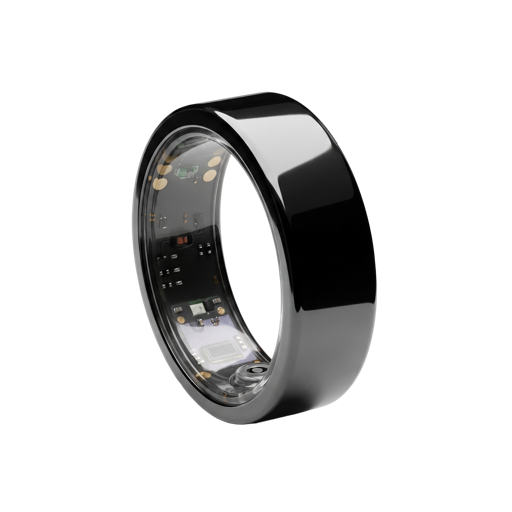 HELIOS
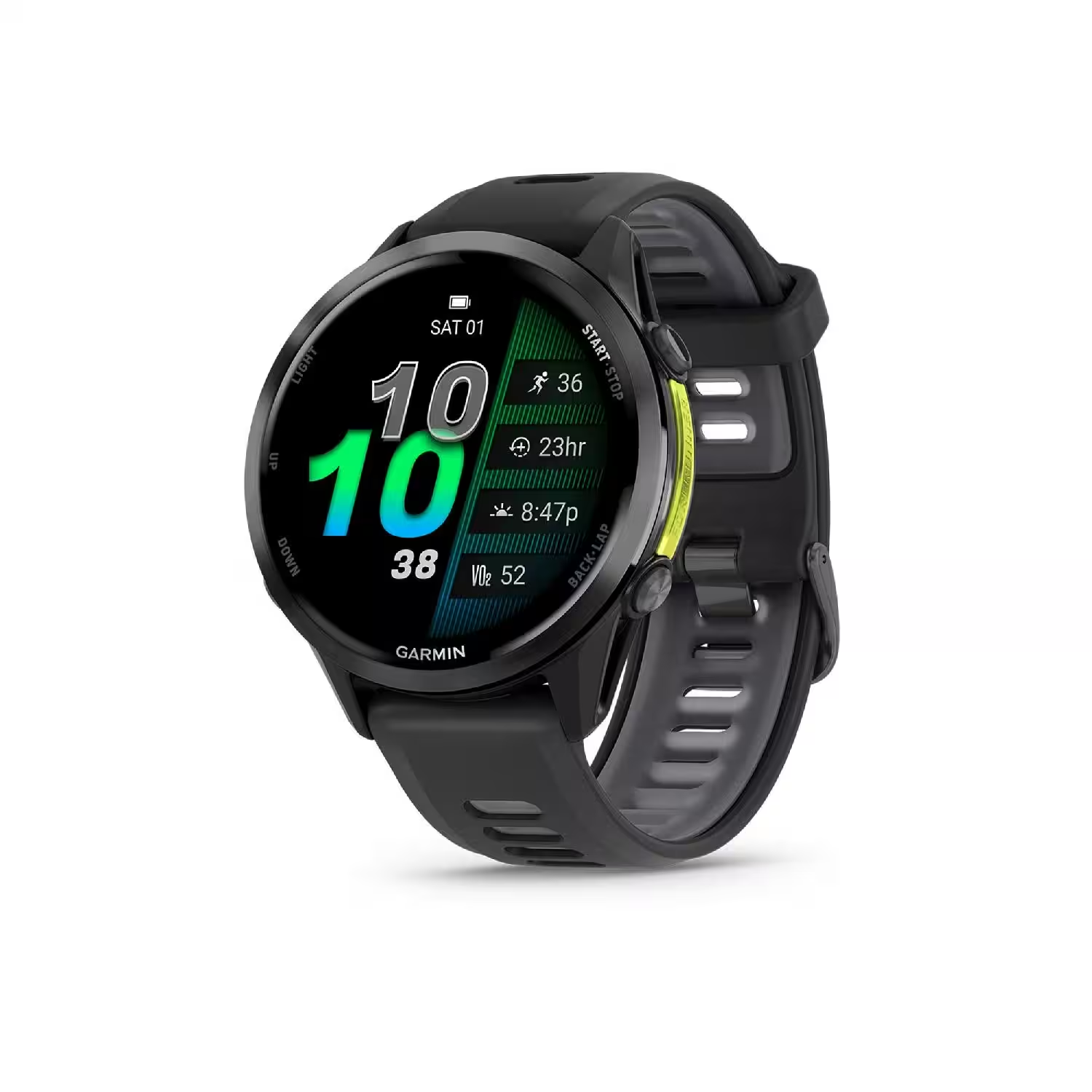 Garmin + Edge
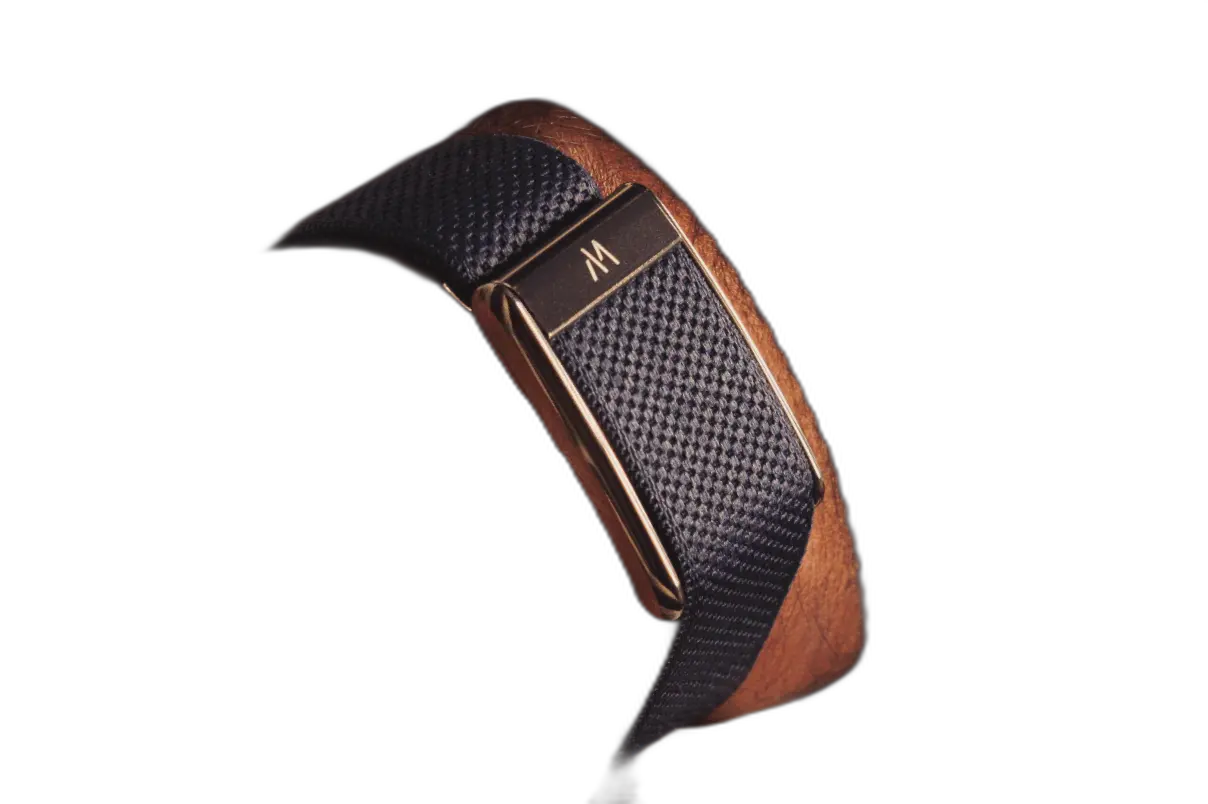 WHOOP
WHOOP| HELIOS | Garmin + Edge | WHOOP | |
|---|---|---|---|
| On every night | ✓ | ~ | ✓ |
| Sees what you ate | ✓ | ✕ | ✕ |
| Changes tomorrow’s session | ✓ | ✕ | ✕ |
| Builds your nutrition plan | ✓ | ✕ | ✕ |
| THE VERDICT | ✓ | – | – |
| One device for the ride and the night | ✓ | ✕ two devices | ✕ |
| Proposes changes, you approve | ✓ | ✕ | ✕ |
| A coach that knows your plan and your food | ✓ | ✕ | ✕ |
If you think your Garmin watch is giving you the recovery numbers you need, you need a reality check.
It’s watching a portion of your recovery, on the nights you wear it, from a wrist that isn’t the right place for a cyclist’s sensor. Seven signs the portion is doing you harm.
You Don’t Actually Wear It to Bed
The amount of times we have asked cyclists if they’re tracking their recovery, they’ve said yes, they’ve got a Garmin. Then: “How often do you wear it?” “Sometimes during the day, sometimes I don’t wear it at all.” That’s not tracking. A big bulky uncomfortable watch comes off, and on those nights Garmin fills the blank with an estimate that looks exactly like a measurement. You’re planning your week off a number that might be a guess.
See a Ring That Stays On →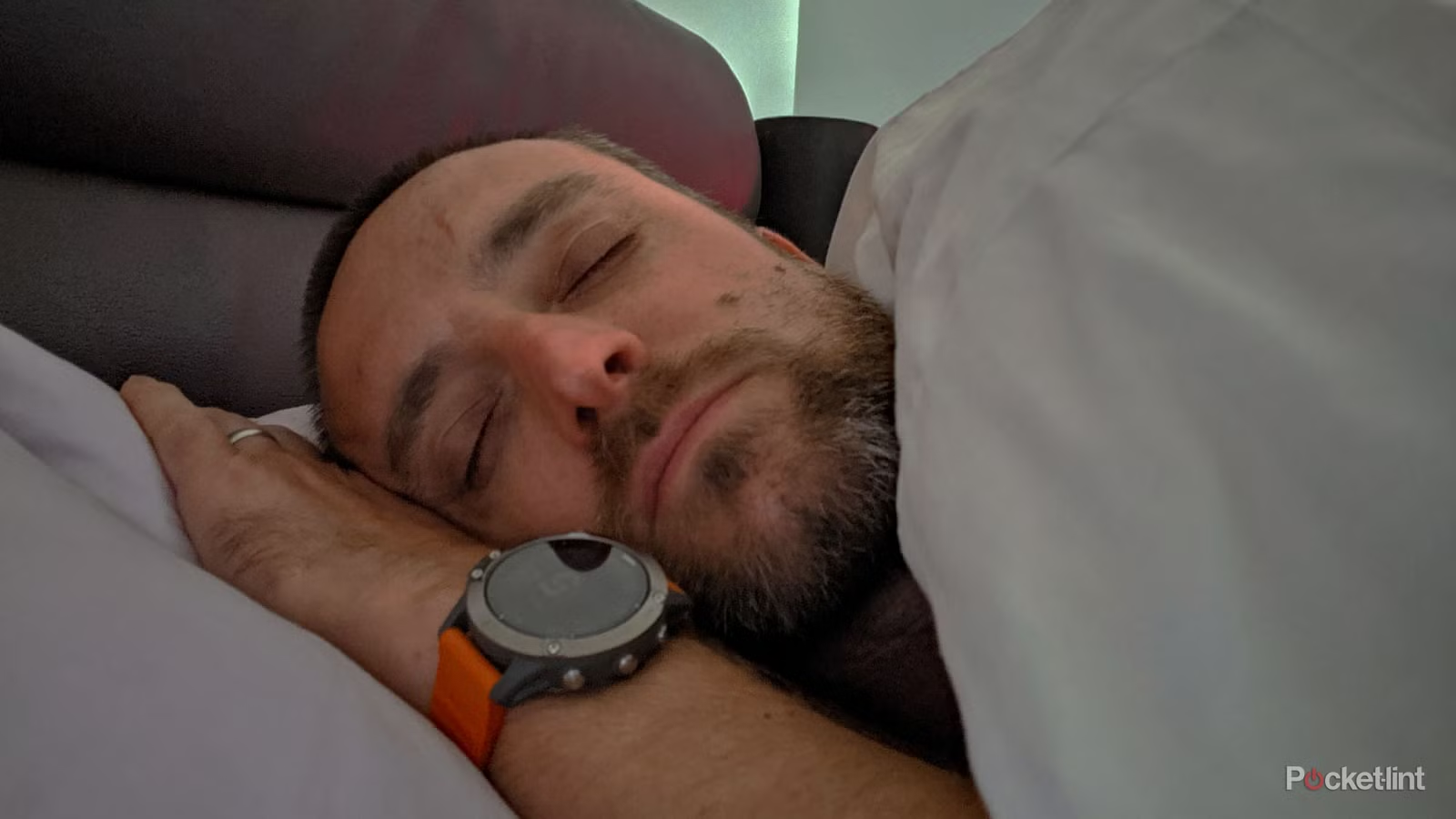
Your Five-Hour Ride Didn’t Move Your Recovery Score
A rider on Garmin’s own forum did a five-hour ride, recorded on his Edge with a power meter. Then: “Body battery after the ride shows no decrease despite the big effort on the bike.” The ride lived on the bars. The score lived on his wrist. Garmin’s own blog says that’s by design: readiness and Body Battery come from the smartwatch, not the Edge. A spike nothing counted is still a spike.
See the Ride in the Number →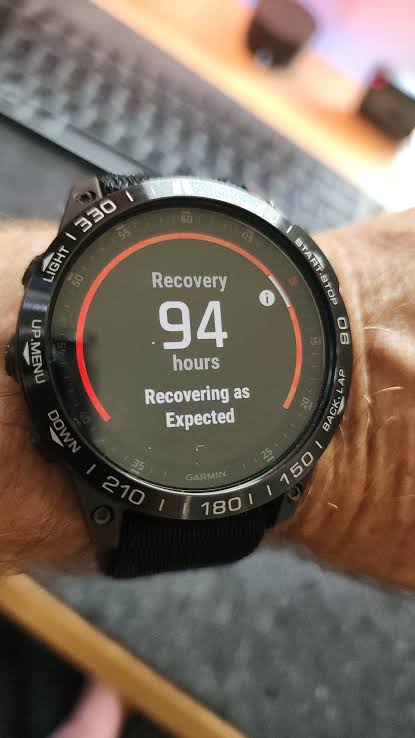
It Said “Ready” on a Morning You Were Wrecked
James, the coach behind Nutrition Triathlon, said it on the record: “this is all simply guesswork. It might be right, but it might be totally wrong because Garmin is mostly using estimates to estimate your readiness for training.” A confident wrong “ready” is how a tired rider does the intervals anyway, and the block after that is where the damage lands.
See What Goes Into the Number →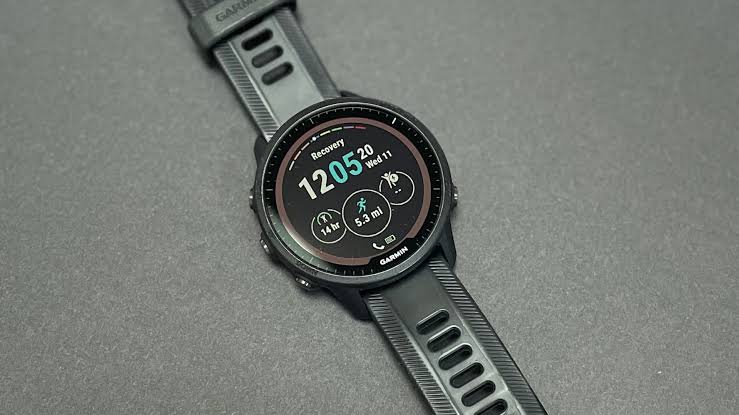
HRV Is the Only Recovery Number You’ve Got
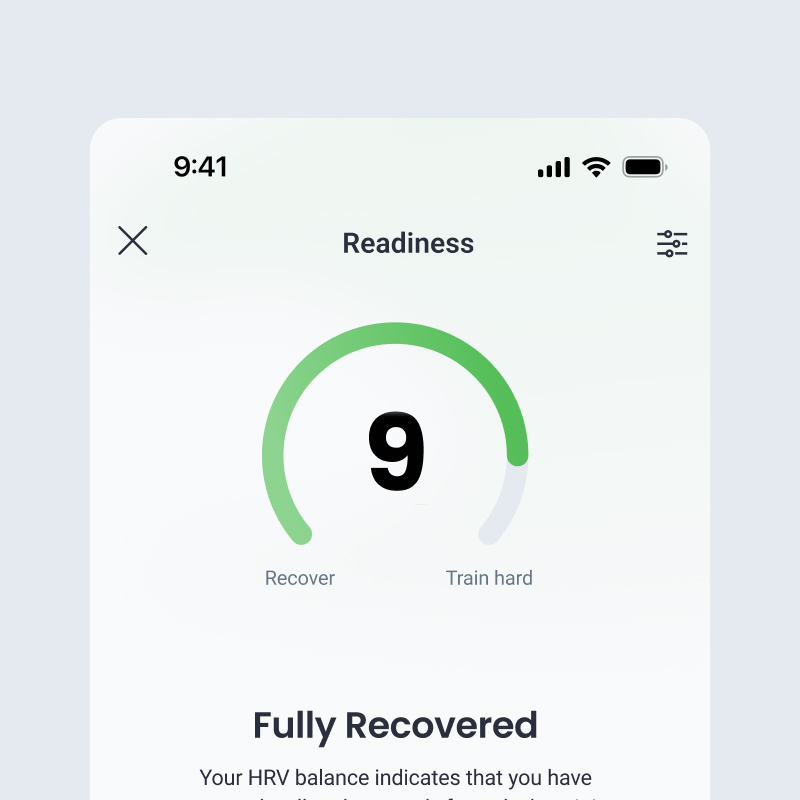
The reality is that 90% of cyclists are not recovering correctly, because they think the only recovery metric they need is a watch that tells them what their HRV is. Real recovery is three components: nutrition and hydration, sleep, and training load control. In 2016 researchers pooled every study on resting HRV and found overreaching barely moves it. On its own, it’s a poor marker of the exact thing you’re using it for. Your Garmin watch could be the sole reason you’re not recovering, and if you don’t believe me, read this paper.
Your Wrist Sensor Drops Out When You Grip the Bars
Not speculation. WHOOP’s own Reddit representative wrote, in public: “When gripping handlebars, blood flow in the wrist gets restricted, which can cause lower HR readings for wrist-based sensors like WHOOP.” A 2017 study tested wrist-worn heart-rate monitors during cycling and only three of five reached acceptable agreement with a chest reference. A finger isn’t gripping anything.
See the Placement →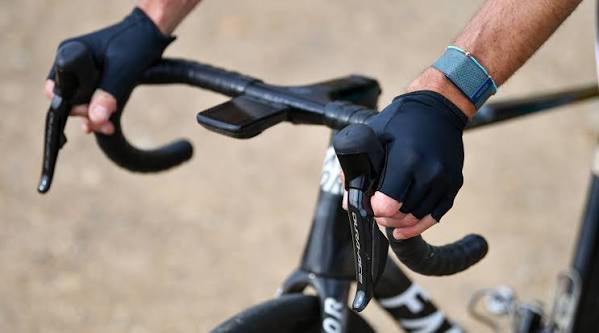
You Eat the Same on a Rest Day as After a Long Ride
Food is the third component of recovery and it’s the one no watch has ever seen. If your plan has never asked what you ate, it can’t tell you when under-fuelling is what’s holding the number down. A watch reads the wrist. It has no idea about the kitchen.
See Food in the Number →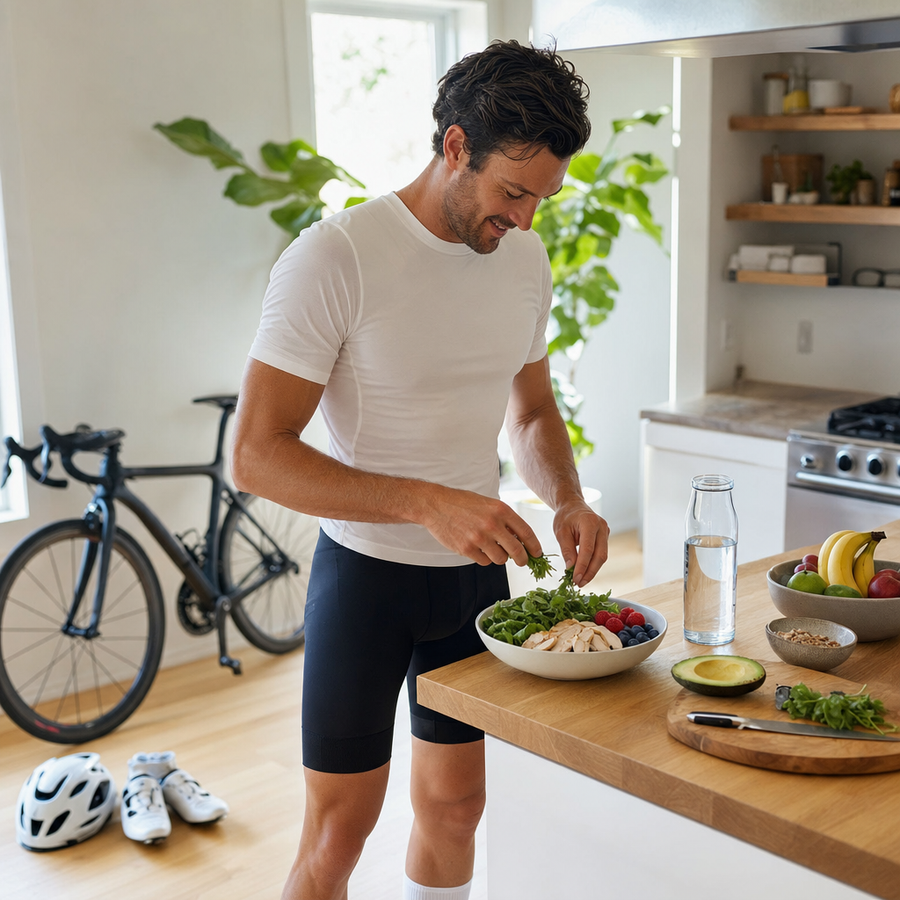
The Number Arrives and Nothing Changes
Say the watch is on every night and the number is right. It’s still just a number. Your plan was written on Sunday and doesn’t know Tuesday’s 41 happened. If your cycling is not a function of a training plan that’s built off and iterated on your sleep, your stress and your nutrition, tied into your actual training, then you indeed are not recovering correctly, which is almost guaranteed to impact your performance. A bulky ugly sports watch is not the answer. A ring you never take off, and an app that turns the night into tomorrow’s plan, is.
Give It 30 Days →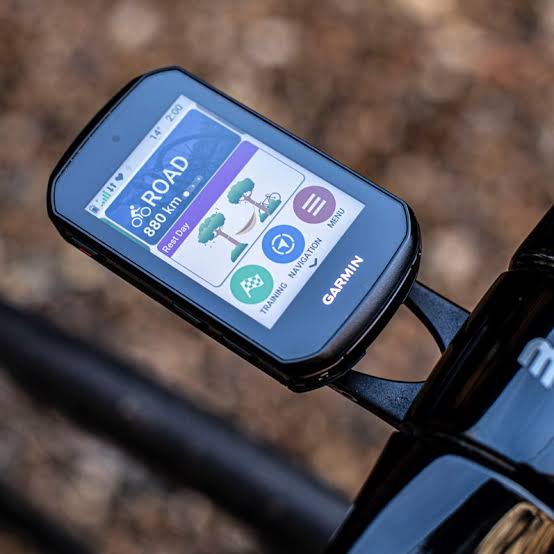
Meet HELIOS + THRIVE
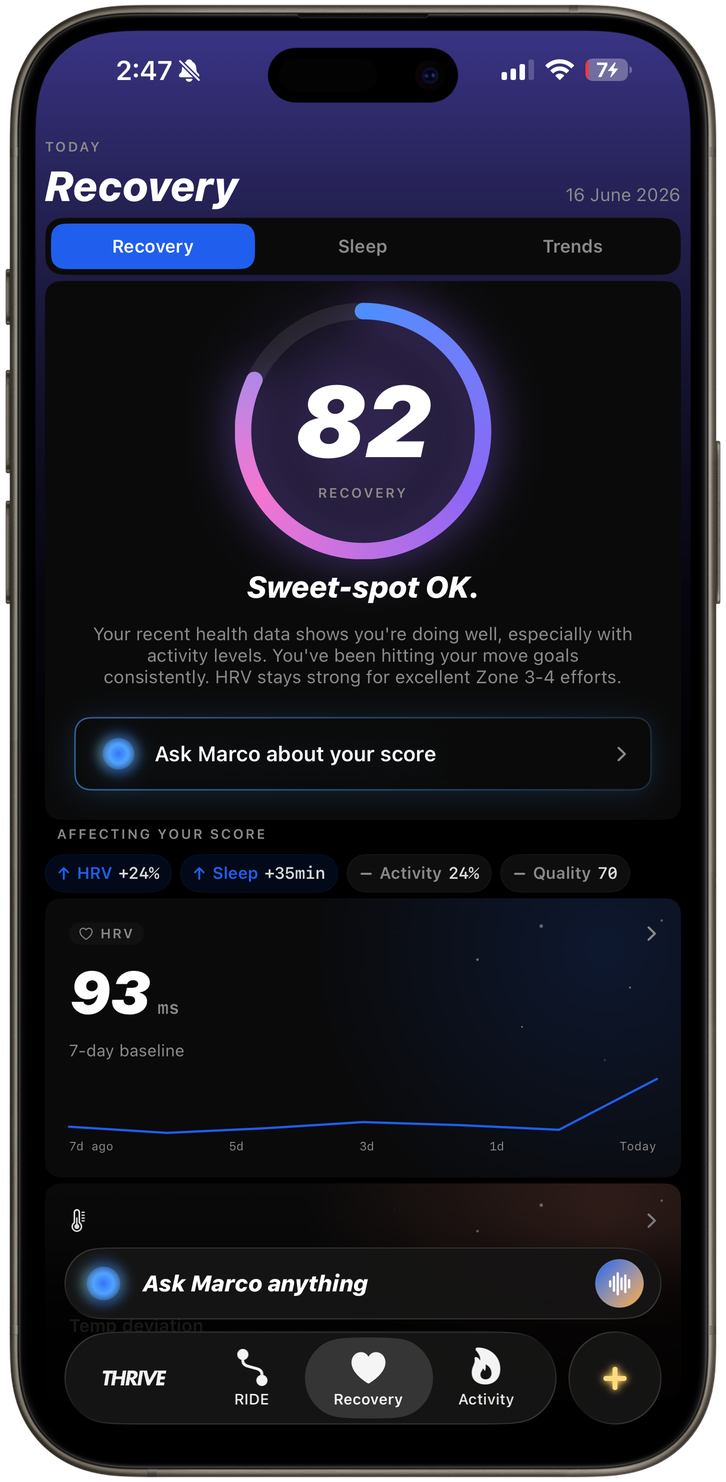
The night, scored: sleep, HRV, resting heart rate and skin temperature, from the ring
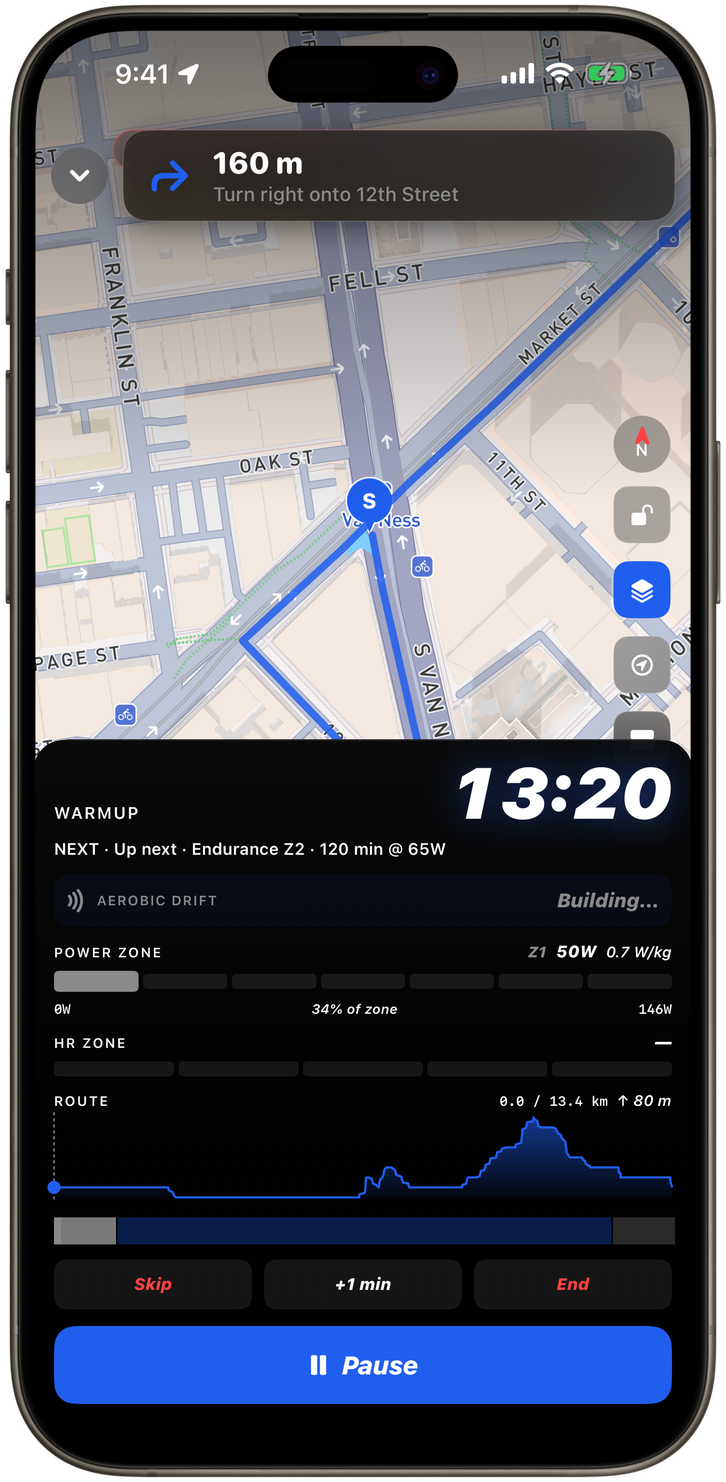
The ride, on your phone: climbs, power, cadence, routes. The Edge stays in the drawer.
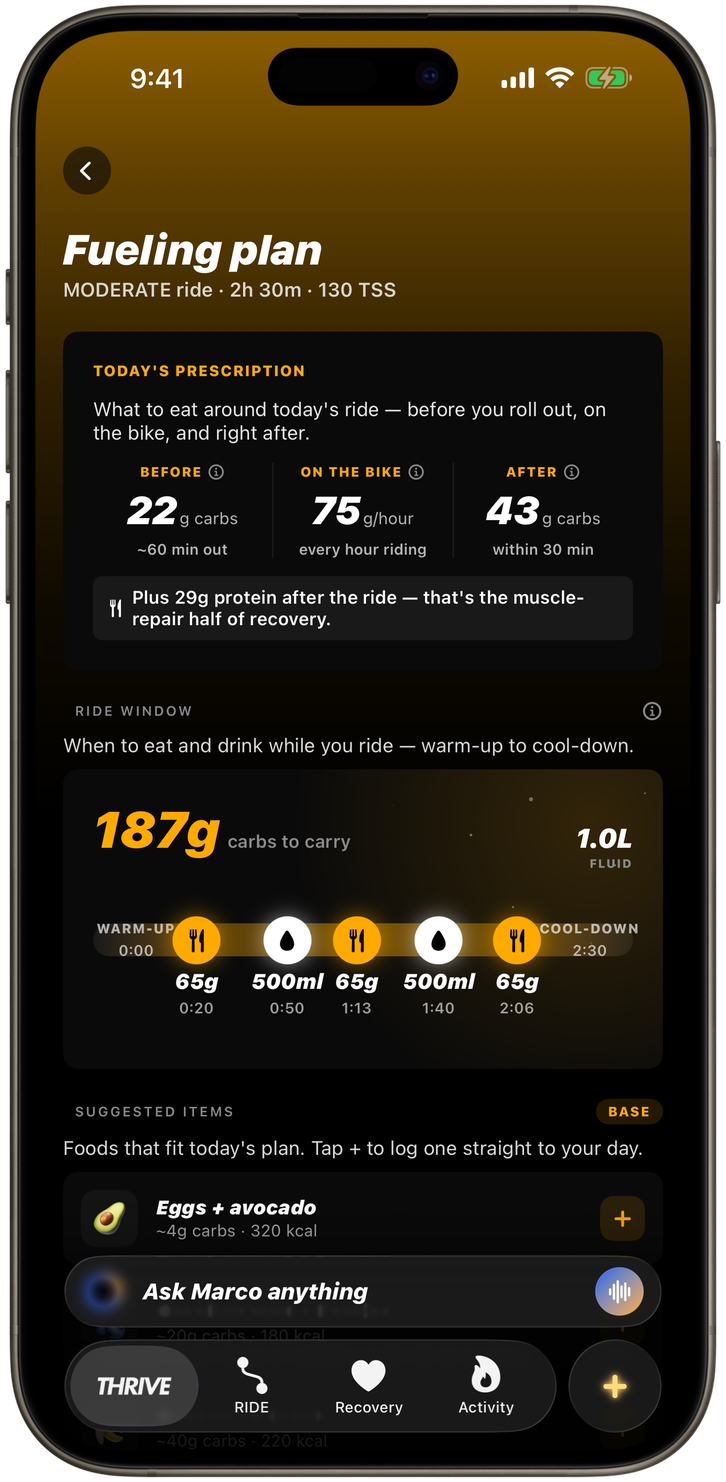
The fuel plan, matched to tomorrow’s session
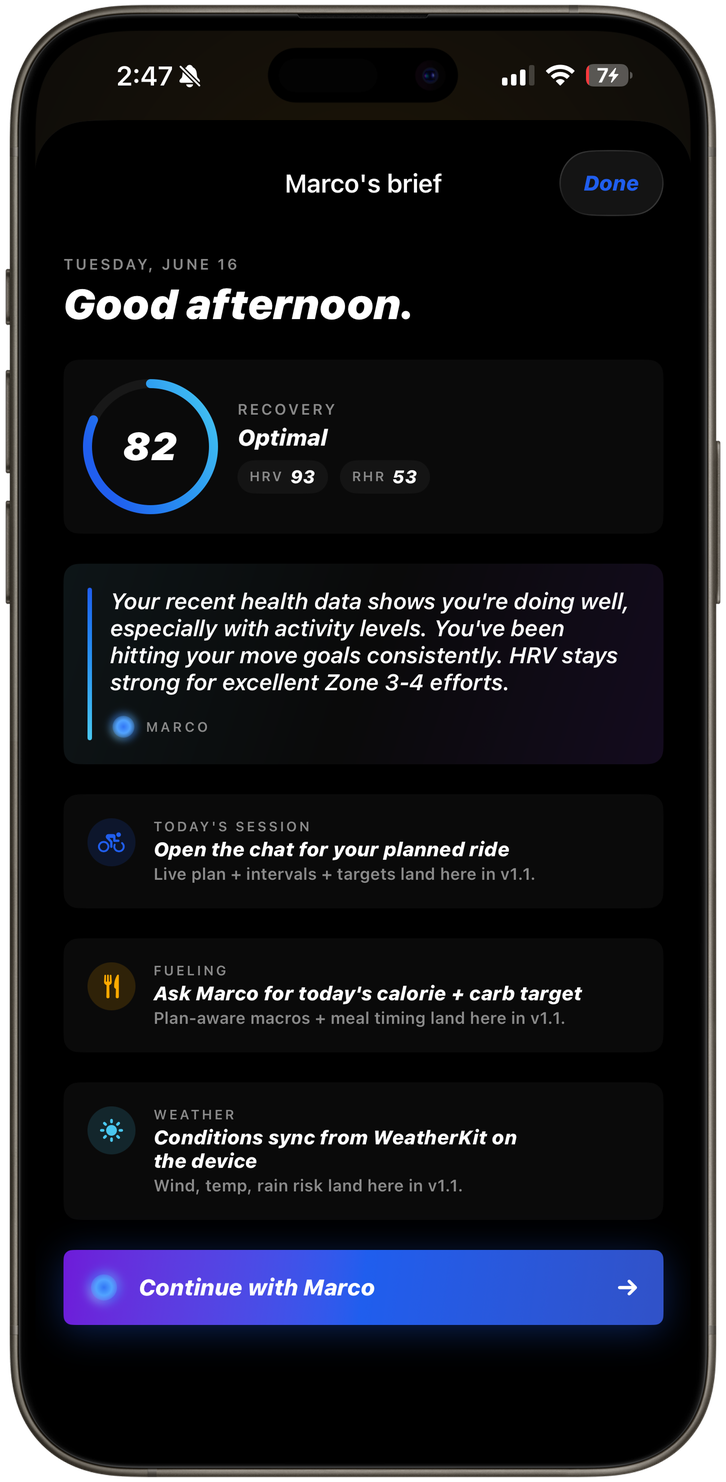
The morning brief: what the night meant, and the day Marco proposes
Everything the last seven signs pointed at lives in one ring and one app.
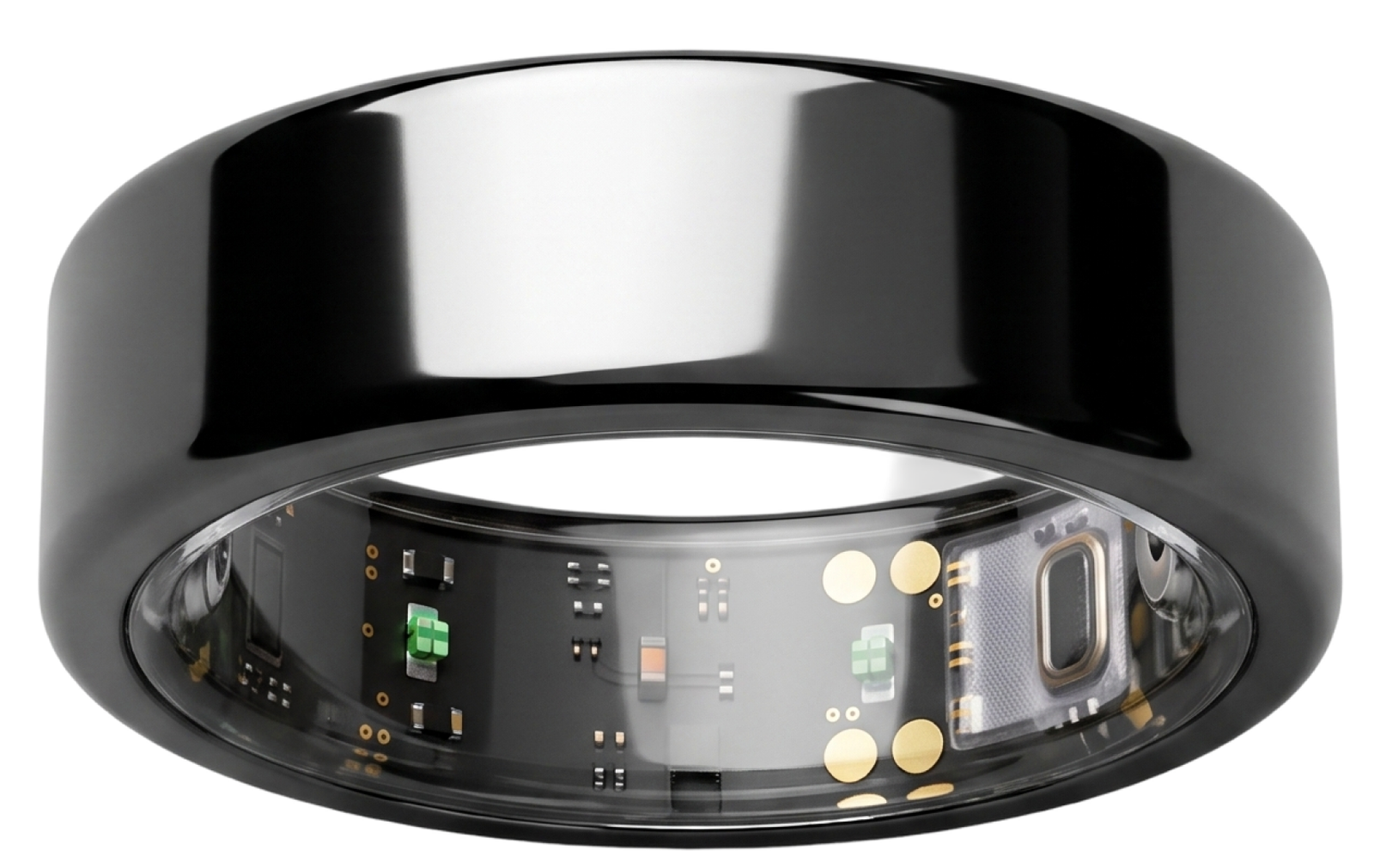
A bulky ugly sports watch is not the answer. You need something comfortable enough and versatile enough to be worn 24/7. An Apple Watch won’t cut it, because you have to charge it every night. A smart band won’t cut it, because they don’t suit every occasion, and they’re big and they’re ugly. A thin, premium, lightweight titanium smart ring ticks every one of those boxes.
Marco is the coach inside it. He runs on a powerful paid model, not a free bolt-on, he’s trained on leading sports scientists, cycling studies and coaches, and he has full context on your recovery, your nutrition, your plan and your goals. He iterates on everything daily. You approve every change. In 2026 there was no product on the market that could see every necessary data point, tie it all together, and give you one consolidated feedback loop. Until now. It’s the world’s first all-in-one system made specifically for cyclists.
How many more weeks will you plan off a number that missed the ride, the meal and the night?
Nothing about this fixes itself. The watch will say “ready” again tomorrow, and the week after. Every block you train off a slice costs you the same three things.
parts of recovery in one score: sleep, training load and food
nights read each week, because there’s no reason to take it off
on your finger, against a sports watch on your wrist
between charges, about 90 minutes to refill
What changes when you swap the watch for the ring
For a rider who has planned every week off a wrist number, the change isn’t subtle. Here is what’s different.
3 to 4 grams of titanium, 7 to 10 days on a charge. There’s no reason to take it off, so there are no blank nights for an estimate to fill.
THRIVE records the ride on your phone and reads the night from the ring, in one app. The five-hour day is in tomorrow’s score.
Sleep, HRV, resting heart rate and training load are listed under the score. Ask Marco “why?” and he answers about this morning.
Photograph the meal, scan the barcode, or tell Marco what you ate. The third part of recovery stops being invisible.
After a bad night Marco proposes the change. Nothing moves until you approve it.
No watch for the morning and computer for the ride. One ring, one app.
What should you expect?
The changes arrive in stages. Here’s what you see, and when.
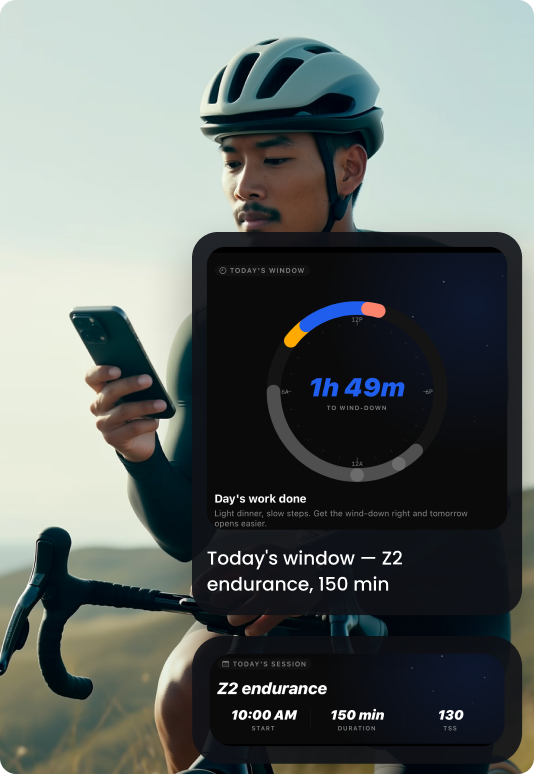
Set up once, then leave it on
The sizing kit confirms your size and the ring goes on. Nothing to take off at night and nothing to pair. THRIVE asks what you’re training for, builds your plan, and sets your daily calorie and carb targets from your weight, your training load and your goal.
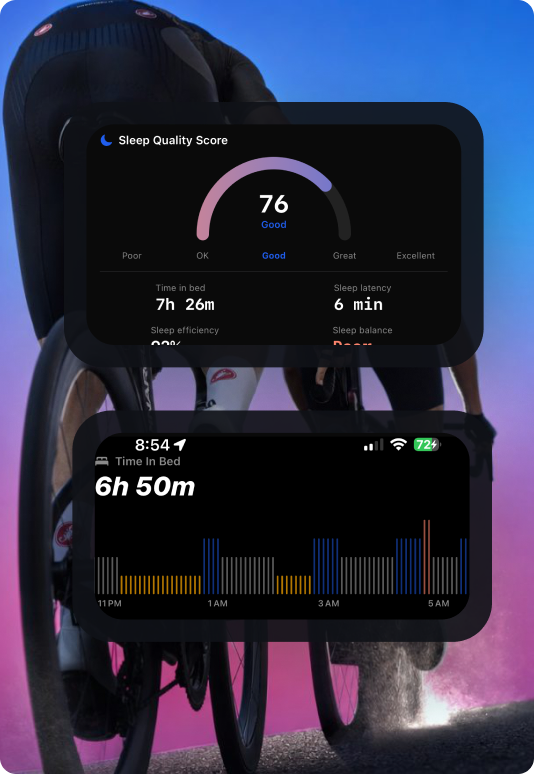
A score you can check
One recovery score, with what went into it listed underneath: sleep, HRV, resting heart rate and the training load you carried in. Marco’s first morning brief covers recovery, today’s session and today’s fuel.
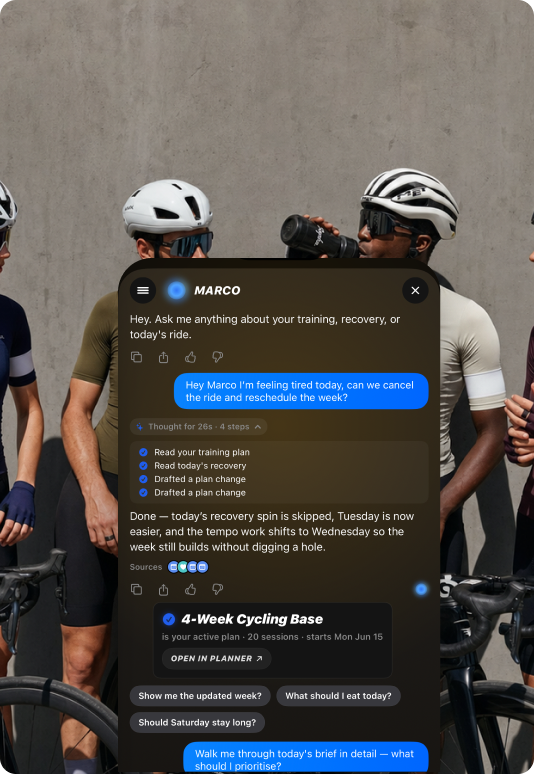
Seven nights out of seven
The ring hasn’t come off, so no night is a guess. The first time you sleep badly before a hard session, Marco proposes the swap and shows you the exact change before anything moves.
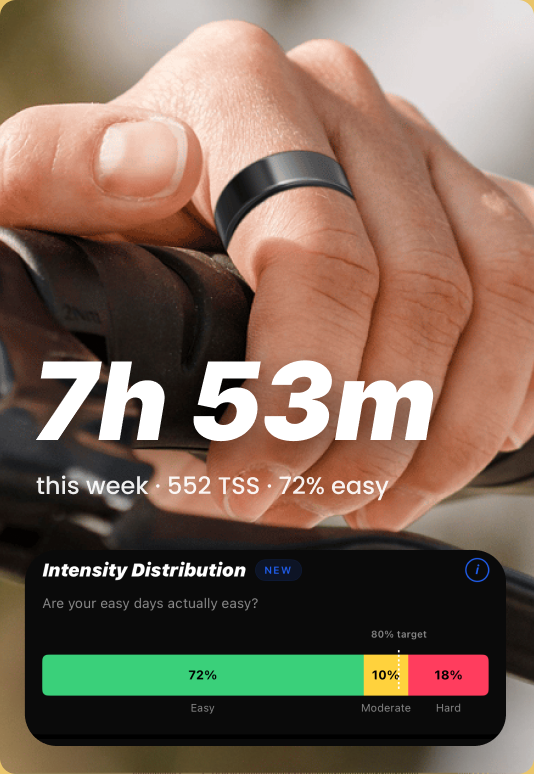
The pattern your watch never showed you
Thirty nights next to thirty days of riding and eating. The week your sleep dropped. The hard day you ate half the carbs. You have 30 days to decide if seeing that was worth it. If not, send it back.
What you see depends on how you train, sleep and eat. The ring measures and THRIVE plans. Neither promises a number.
What the rest of your recovery is worth, measured
A watch reads a slice of one of these. Researchers have put numbers on all of them.
In 2019 researchers split well-trained cyclists into two groups for eight weeks. One followed a fixed plan. The other had each day’s session decided by that morning’s recovery reading. Only the second group improved: 7.3% in the time trial and 5.1% in peak power.
In 2019 Australian researchers had nine endurance cyclists and triathletes sleep more than eight hours a night for three nights. They rode the time trial in 56.8 minutes, against 58.7 on their normal sleep. Three short nights made them slower.
In 2014 two sports scientists pooled every controlled trial of taking in carbohydrate during exercise, 679 athletes in all. In 82% of them performance improved, and the longer the effort, the bigger the gain.
In 2014 researchers put well-trained endurance athletes on different training mixes. The ones who kept most days easy and a few days truly hard improved, including 11.7% in the most oxygen their body could use. The ones who trained medium-hard every day didn’t improve.
These are the researchers’ results in their own studies, not a promise from a ring. A watch can’t act on any of them: it never sees your plan or your food, and it isn’t on every night. HELIOS + THRIVE reads all of it and proposes the change.
The numbers, side by side
Set the two next to each other and the gap is easy to see.
| Garmin Fenix 8 + Edge 1050 | HELIOS + THRIVE | |
|---|---|---|
| Nights it actually reads | The nights you wear it | Every night |
| Parts of recovery it sees | Part of 1 of 3 | 3 of 3: sleep, training load, food |
| Devices to buy and charge | 2 | 1 |
| On your body overnight | A sports watch | 3 to 4 grams |
| After a bad night | A lower number | A proposed change to today’s session |
| List price | $1,099.99 + $699.99 | See today’s offer below |
Love it in 30 days — or your money back. Every dollar.
Ride it for 30 days. If it can’t tell you what your watch couldn’t, send it back for every penny.
Reaching number seven means one thing: you’re done planning your week off a slice.
In 2026 there was no product on the market that could see every necessary data point, tie it all together, and give you one consolidated feedback loop. So we built it. A ring small, light and aesthetic enough to wear 24/7, and an app that turns what it reads into your plan.
Free sizing kit ships first · Free shipping · 30-day money-back
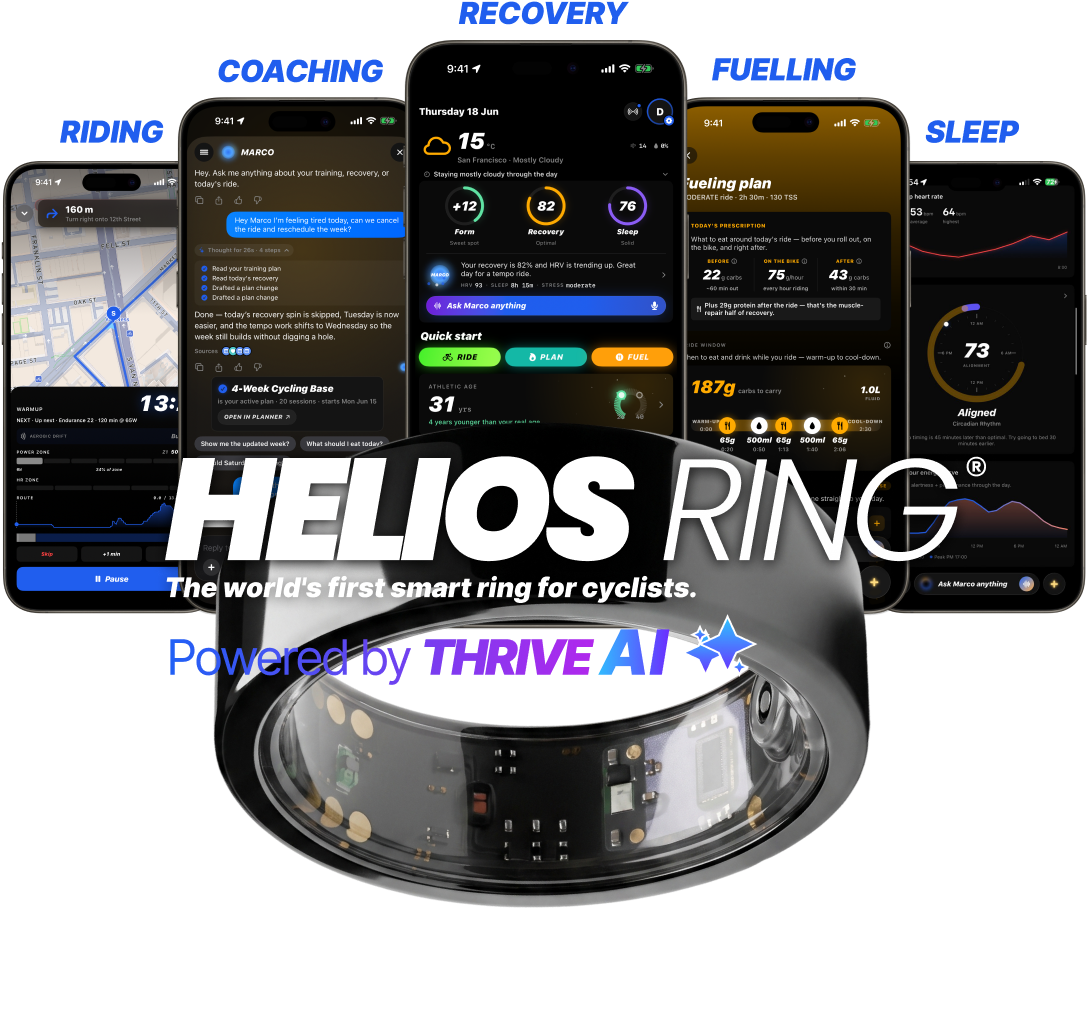
Everything on this page, in one ring
The HELIOS titanium ring, the THRIVE app and Marco — the ride computer, training plan and fuelling all in one place.
CLAIM 45% OFF →30-day money-back guarantee. If it can’t tell you why you’re not getting faster, send it back.
The reviews are in
Real riders, in their own words.
“I’d taken my watch off at night for years and never joined the dots.”
“I’d taken my watch off at night for years and never joined the dots. Now the number has every night in it.”
"It's the first thing I've owned that changed the plan instead of just grading it."
“Seven days a charge. It’s never on the cable when I need it.”
“First FTP gain in a year, and it came from resting more.”
"It proposes and I approve. That's the right way round."
Testimonials reflect individual experiences. Results vary.
Four questions riders ask first
Do I need this if my Garmin already gives me a readiness score?
That score is built from the wrist, on the nights you wore it. It has never seen your food, and it doesn’t see a ride recorded on your Edge. If you plan your week off it, you’re planning off a portion.
Is a ring enough for serious riding?
The ring measures around the clock. Your phone is the ride screen: climbs, estimated power, cadence, heart rate, routes and group rides. Power is estimated, so if you race on watts, keep the meter.
Will it change my plan without asking?
No. Marco proposes, you see the exact change, and nothing moves until you tap yes.
What if it doesn’t fit, or I don’t like it?
A free sizing kit ships first so the size is right. Then you have 30 days from delivery for a full refund.
Your next hard week can start from a number that saw all of it
Reads every night. Knows what you ate. Proposes the week — you approve it.
Give it 30 nights →