HELIOS vs Garmin Fenix 8: Which One Is Actually Tracking Your Recovery?
If you think your Garmin watch is giving you the recovery numbers you need, you need a reality check. I've worn a Fenix for years and believed mine. Then I wore a ring next to it for four months, wrote both numbers down every morning, and found out which one had been watching me and which one had been guessing.
By Tom Ashcroft, Test Editor · 4 months side by side · Wearables reviewed since 2018
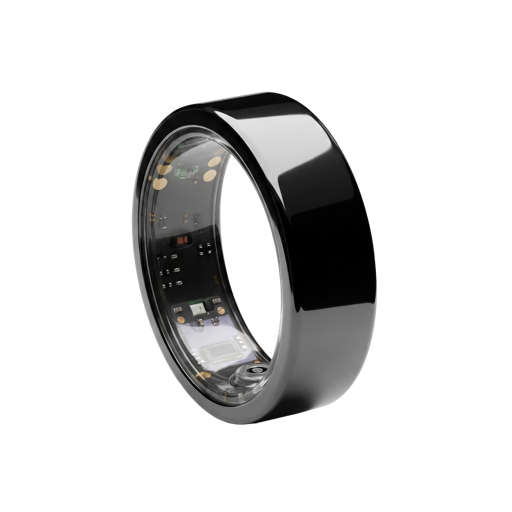 HELIOS + THRIVE
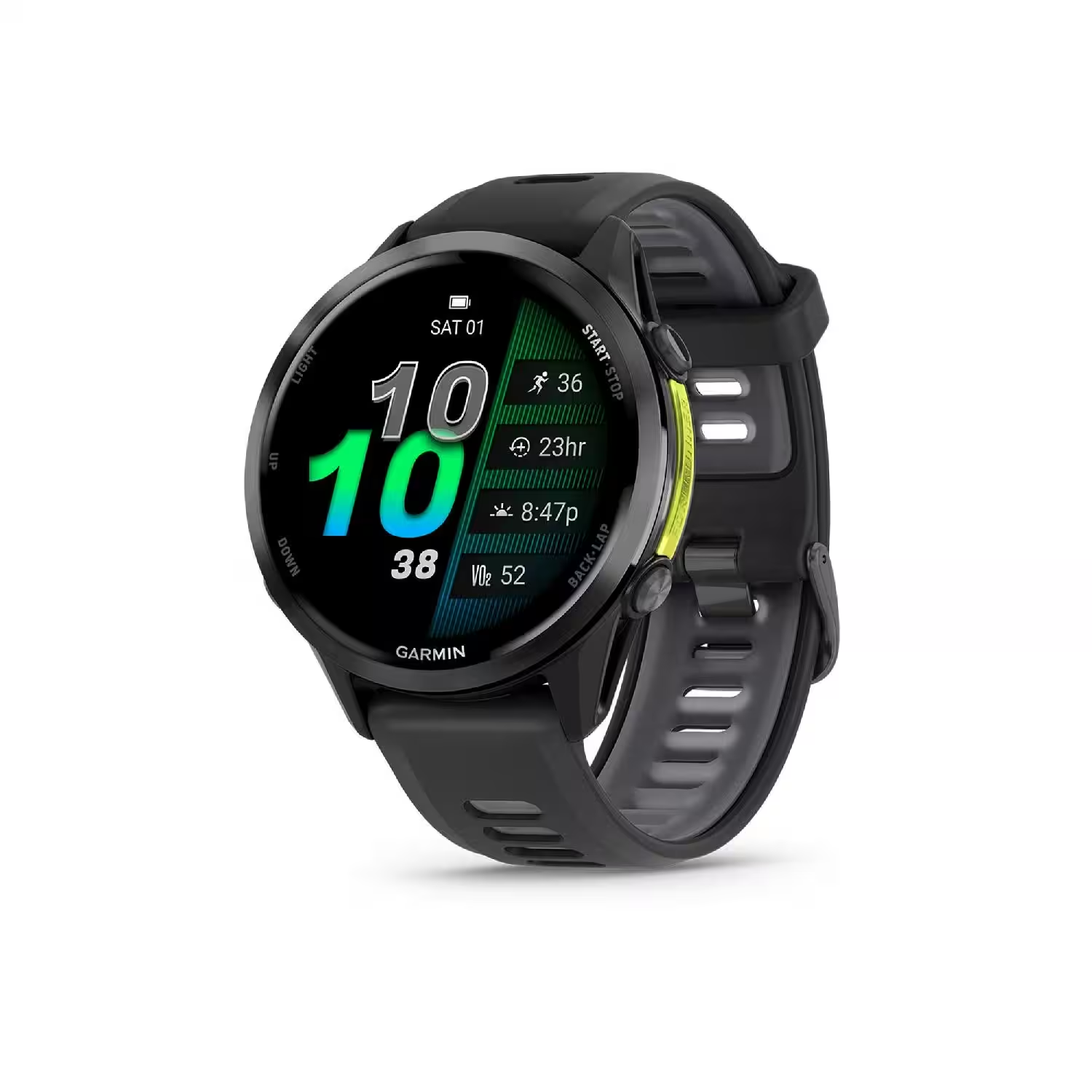 GARMIN FENIX 8 + EDGE 1050
Here's the problem I had, and I'd bet it's yours. I train around a job. I follow the plan. My Edge has six years of rides in it, every one recorded to the second. My Fenix gives me a readiness number every morning. And for most of last year I wasn't getting faster, and neither device could tell me why.
The amount of times I've asked cyclists if they're tracking their recovery, they've said yes, they've got a Garmin. Then I ask, "How often do you wear it?" "Sometimes during the day, sometimes I don't wear it at all." That's not tracking. I was one of them.
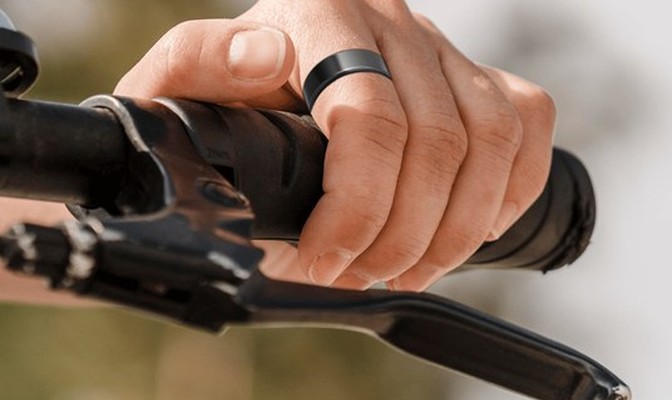
Wearing a Garmin watch is not tracking your recovery.
Quick Verdict Summary
Head-to-head, four months on the same legs
HELIOS
Winner- Worn every night, 3 to 4 grams
- Sees sleep, training and food together
- Changes tomorrow's session, with approval
- A charge lasts a week or more
- Sensor on the finger, not the wrist
Garmin
- Has: a screen on the bars, and the maps
- Has: a ride file for every ride
- Has: six years of my history
- Missing: anything I ate
- Missing: the nights the watch was charging
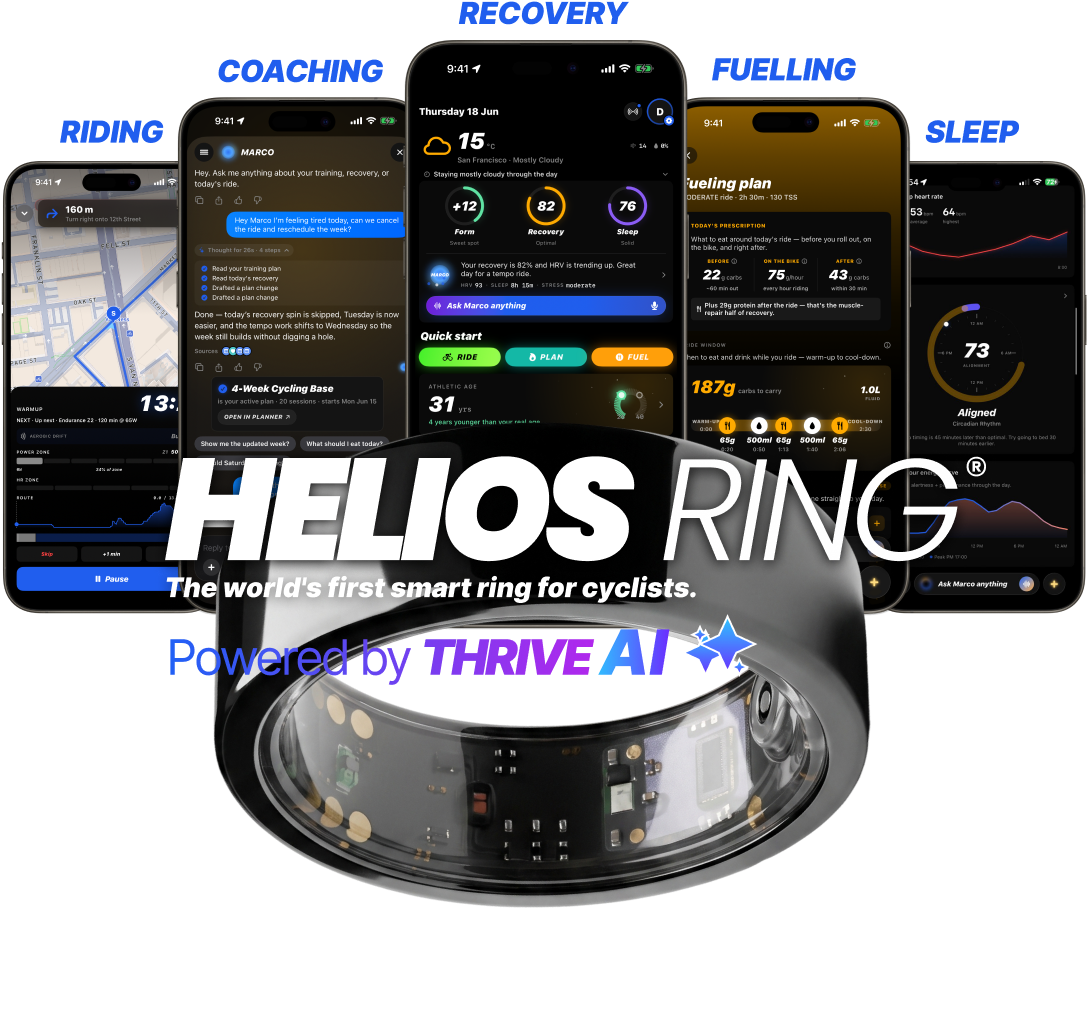
Side-by-Side Feature Comparison
What each one can see, and what each one can change
| Feature | HELIOS | Garmin Fenix 8 + Edge |
|---|---|---|
| Worn during sleep | Every night — 3–4 g | Only if worn to bed |
| Charge | 7–10 days | Watch: days · Edge: per ride |
| Full charge time | ~90 min | ~2 hr |
| Heart rate | Optical, finger | Optical, wrist |
| Knows what you ate | Yes — same app | |
| Puts sleep, training and food together | Yes | |
| Changes tomorrow’s session | Proposes it, you approve | |
| Rebuilds the rest of the week | Yes | |
| A coach you can ask a question | Marco, in the app | |
| Asks before it changes anything | Yes | |
| Sees training load | With sleep and food | On its own |
| Knows how you slept last night | Every night | Only if worn |
| Power | Estimated trend | Meter, if you own one |
| Software | THRIVE, first month free | Connect+ for extras |
| Water rating | 330 ft | Varies |
| Ride screen | Your phone, in the app | Edge on the bars |
| Navigation | Yes, in the app | On the Edge |
| Sensor position | Finger | Wrist |
Want to Know If You're Actually Recovering?
Ride it for a month. If it can't tell you what your watch couldn't, send it back.
See the HELIOS ring →Road Test: Three Mornings That Decided It
Same legs, same rides, both devices, four months. Three things I measured, written down before I looked at either number.
Nights it was actually on me
HELIOS: came off twice in four months, both times to charge. Every night was read.
Garmin Fenix 8: on my wrist far fewer nights than I’d have guessed, and the blank nights were filled with an estimate.
What goes into the morning number
HELIOS: one number built from last night, this week’s training and what I ate, in the same app.
Garmin Fenix 8: one number built from the watch, on the nights it was on. It has never seen a meal.
Where the Sensor Sits
HELIOS: the sensor is on the finger, which isn’t gripping anything.
Garmin Fenix 8: the sensor is on the wrist, where WHOOP’s own representative says grip restricts blood flow.
Real-World Testing Insights
Straight answers from four months of testing
Q: My FTP has been flat for a year. Is that really a recovery problem?
Often, yes, and there are three ways it happens. In 2016 two researchers, Drew and Finch, reviewed every study linking training load to injury and illness, and found load spikes tied to injury risk in 93% of them and to illness in 75%. That 2015 sleep review found sleep loss reduces sport-specific performance. Impey's 2018 work on fuelling showed that under-eating around hard sessions stops the training from turning into race performance.
Three ways to do the work and not get the result. A watch on your wrist during the day sees part of one of them. The ring, the food log and the training plan live in one app, so all three go into the same number.
Q: I've got six years in Garmin. Do I lose it?
Keep it. HELIOS is a closed system on purpose: nothing to pair, nothing to reconcile.
From day one, plan, fuel, recovery and ride live in one app instead of two devices that don't talk.
Q: Does the ring track the ride?
The app does: climbs, estimated power, cadence, heart rate, routes, group rides and the post-ride breakdown. Your phone is the screen. The ring’s job is the other 22 hours.
Stated plainly: HELIOS estimates power as a trend. It is not a power meter. If you race on watts, keep the meter.
Q: Does THRIVE change my plan without asking?
No. Marco proposes, you approve.
It looks at last night and adjusts today. It shows you what it wants to move and why, and waits. Nothing changes until you tap approve:
- It never changes anything mid-ride
- It adjusts the day, then reflows the week
- It tells you which inputs mattered
- You can say no, and it adjusts to that too
Two limits, stated plainly:
• Adaptation is daily, from last night, never mid-ride
• Marco holds three inputs: sleep, training and food
• It proposes. You approve. Every time.
That one design decision is the difference between a coach and an autopilot, and it stays true on the mornings the number is wrong.
Q: What do I give up if I drop Garmin?
The screen on the bars and your history in Connect. If a dedicated screen matters more to you than knowing why the number isn’t moving, that’s a fair reason to stay.
Plenty of riders keep the Edge for the map and add the ring for the other 22 hours. That’s what I did.
What It Costs — Two Years
HELIOS, two years
What you get:
- Sleep, training and food in one number
- A plan that changes when you do
- 7 to 10 days a charge, worn every night
- Marco, a coach you can ask
- Recovery and sleep, scored nightly
The Garmin route, two years
What you get:
- A ride file for every ride, and no answer
- Six years of history in one place
- No view of what you ate
- Recovery only on nights worn
- The number arrives; the plan doesn’t move
Find Out Why It Isn’t Showing.
With the ride computer, training plan and fuelling all in the app
See the HELIOS ring →Who Should Buy What?
Choose HELIOS if:
- You want to know why you're not getting faster
- You take your watch off at night
- You want food in the recovery picture
- You want the plan to change when your sleep does
- You'd rather approve changes than discover them
- You want one app for plan, food, ride and coach
Choose Garmin if:
- A screen on the bars matters more than knowing why
- You wear the watch to bed every night without fail
- You have a separate way of handling food
- You'll change your own plan after a bad night
- You don't need the readiness number to do anything
- You want the map on the Edge and nothing else to change
After Four Months, Here’s What I’m Using
The ring, every night. THRIVE for the plan and the ride.
The Edge is still on the bars for the map on routes I don't know. The Fenix is in a drawer.
I’m not claiming the ring did that on its own. I’m claiming that for a full year before it, nothing I owned could have told me what was wrong.
Garmin recorded my year. HELIOS explained it.
If you’re doing the work and not getting faster, this is the one that can tell you why.
HELIOS
Garmin
TOM'S TOP PICK: HELIOS + THRIVE
“The first thing I've worn that was actually there for the part of the day that decides the next one.”
The difference is what goes into the number and what happens after it. HELIOS puts sleep, training and food into one call, then proposes a change and waits for you.
With the ring reading every night, you get a plan that answers to how you actually recovered
- 30-day money-back guarantee
- 2-year warranty
- In stock — ships in 2 business days
Key Takeaways
- Wearing a Garmin watch is not tracking your recovery. It's a slice of one input, on the nights you wore it.
- Garmin's own blog says readiness lives on the watch, not the Edge.
- The science says one marker can't carry the job; HELIOS reads three.
- The wrist is the wrong place for a cyclist's sensor, and a brand rep said so in writing.
- THRIVE proposes tomorrow; you approve. Daily, never mid-ride.
- Power is estimated. Keep the meter if you race on watts.
About HELIOS
HELIOS is a thin, premium, lightweight titanium ring you wear 24/7, feeding an app that holds the rest of your recovery. HELIOS: grade-5 titanium, 3–4 g, 7–10 day battery, heart rate, blood oxygen, skin temperature and motion sensors, water resistant to 330 ft. THRIVE: asks about you and your goal, builds your plan, builds the nutrition plan that fuels it (photo, barcode, saved meals, or tell Marco), and runs your rides through its own fully equipped bike computer with climbs, estimated power, cadence, heart rate, routes and group rides. All three components of recovery in one place. Marco is the coach inside it, trained on sports scientists and cycling coaches, with full context on your recovery, nutrition, plan and goals. He proposes; you approve. THRIVE's claim is that in 2026 no product could see every necessary data point, tie it together and give you one feedback loop, so they built one.
Key Features
- Grade-5 titanium, 3–4 g
- Heart rate, blood oxygen, skin temp
- 7–10 day battery, USB-C
- 330 ft water resistant, CE certified
- Marco proposes; you approve
- Daily adaptation, never mid-ride
- Power is an estimated relative trend
What's Included
- HELIOS titanium smart ring
- Ride computer and plan
- Nutrition plan and Marco
- Free sizing kit first, if you need one
- 30-day money-back guarantee
- 2-year warranty
- Free shipping
Ready for a Reality Check You Can Act On?
See the HELIOS ring →30-Day Returns · Free Shipping · 2-Year Warranty